
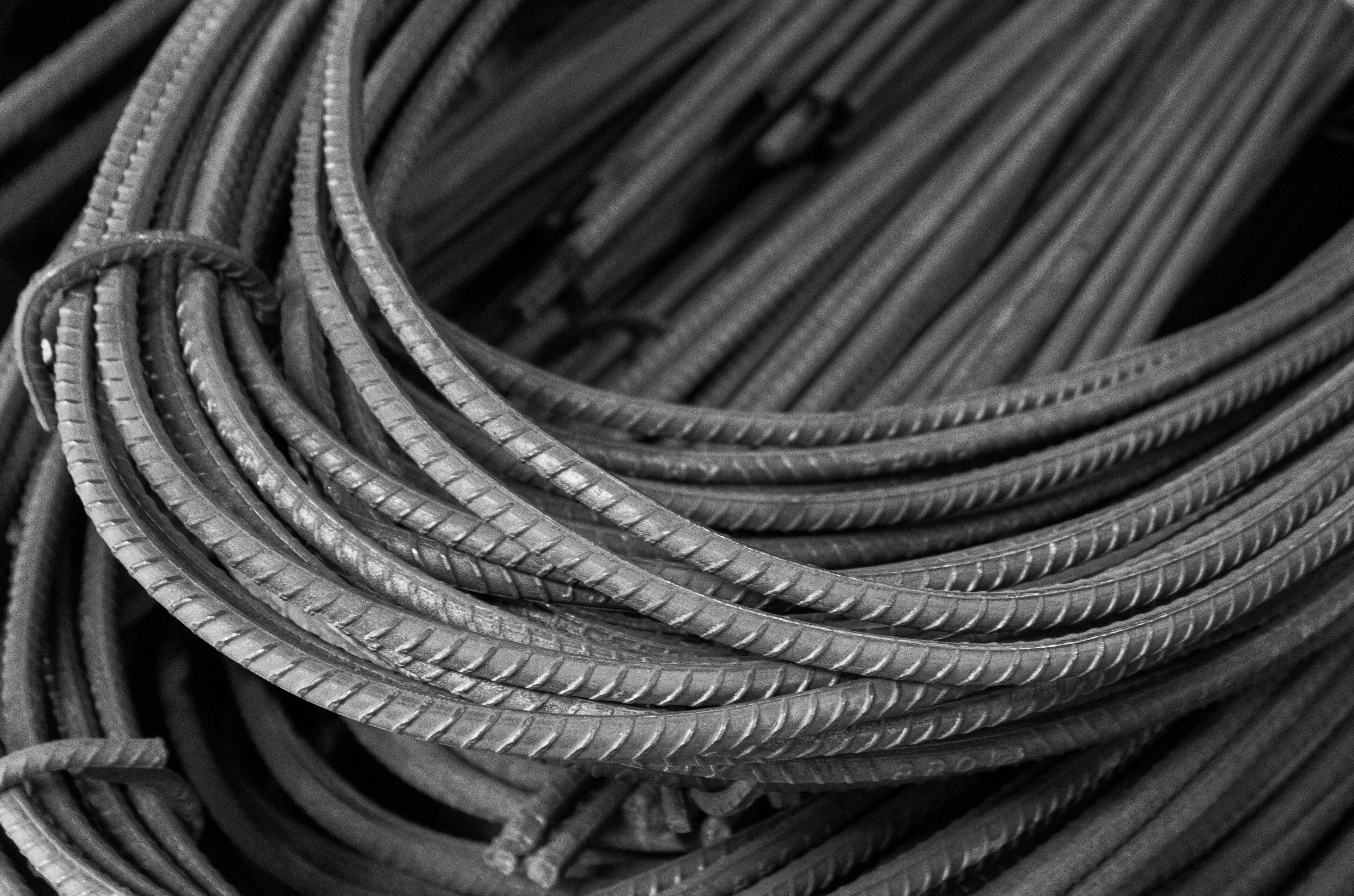
Steel Reinforcement: Types, Costs, and Best Practices
Introduction
Steel reinforcement (rebar) is the backbone of reinforced concrete structures. It provides the tensile strength that concrete lacks, ensuring your building can withstand loads, stresses, and environmental factors. This comprehensive guide covers the different types of steel reinforcement, their applications, costs, and best practices for estimation.
Whether you`'`re designing a residential foundation or a high-rise commercial building, understanding steel reinforcement is crucial for structural integrity and budget management.
💡 Key Insight: Steel reinforcement typically accounts for 20-30% of the total material cost in reinforced concrete structures.
Types of Steel Reinforcement
There are several types of steel reinforcement available, each with specific characteristics and applications:
1. TMT Bars (Thermo-Mechanically Treated)
TMT bars are the most commonly used reinforcement steel in modern construction. They undergo a unique heat treatment process that creates a hard outer layer and a soft inner core, providing excellent strength and ductility.
- Grades: Fe 415, Fe 500, Fe 550, Fe 600
- Advantages: High strength, excellent bond with concrete, weldable, ductile
- Applications: Columns, beams, slabs, foundations, pre-stressed structures
2. Mild Steel Bars
Mild steel bars are the traditional reinforcement type. They have lower strength but higher ductility compared to TMT bars.
- Grades: Fe 250, Fe 275
- Advantages: High ductility, easy to bend, cheaper
- Applications: Light structures, residential slabs, tension members
3. High-Strength Deformed Bars (HSD)
HSD bars are similar to TMT bars but are manufactured through a different process. They have a distinct rib pattern that enhances bond strength with concrete.
- Grades: Fe 415, Fe 500
- Advantages: Excellent bond strength, high tensile capacity
- Applications: Heavy-duty structures, bridges, high-rise buildings
4. Stainless Steel Reinforcement
Used in corrosive environments where standard steel would deteriorate rapidly.
- Advantages: Corrosion-resistant, longer lifespan
- Applications: Marine structures, chemical plants, coastal construction
TMT Bars vs Mild Steel Bars: A Comparison
| Characteristic | TMT Bars | Mild Steel Bars |
|---|---|---|
| Tensile Strength | High (415-600 MPa) | Low (250-275 MPa) |
| Ductility | Good | Excellent |
| Bond Strength | Excellent | Good |
| Corrosion Resistance | Good | Fair |
| Weldability | Good | Excellent |
| Cost | Higher | Lower |
| Applications | Structural, heavy loads | Light structures, slabs |
⚠️ Note: For structural applications, TMT bars (Fe 500 or higher) are recommended. Mild steel bars should only be used for non-critical elements.
Common Steel Bar Diameters
Steel reinforcement bars are available in various diameters. The choice depends on the structural requirements and design specifications.
| Diameter (mm) | Typical Applications | Weight (kg/m) |
|---|---|---|
| 6mm | Stirrups, ties, light reinforcement | 0.222 |
| 8mm | Slabs, light beams, ties | 0.395 |
| 10mm | Slabs, small columns, beams | 0.617 |
| 12mm | Columns, beams, heavy slabs | 0.888 |
| 16mm | Primary reinforcement in columns, beams | 1.579 |
| 20mm | Heavy columns, beams, foundations | 2.466 |
| 25mm | Large structures, heavy foundations | 3.854 |
💡 Pro Tip: Use the formula Weight (kg/m) = d² / 162where d is the diameter in mm to calculate bar weight.
How to Estimate Steel Reinforcement
Estimating steel reinforcement requires careful calculation of quantities, lengths, and weights. Here`'`s a step-by-step approach:
Step 1: Determine Bar Types and Diameters
Refer to structural drawings to identify the types of bars required (main bars, stirrups, ties, etc.) and their diameters. Common sizes range from 6mm to 25mm.
Step 2: Calculate Bar Lengths
For each structural member, calculate the total length of each bar type:
- Straight bars: Member length + development length + laps
- Bent bars: Straight length + bend allowances + hooks
- Stirrups and ties: 2 × (width + depth) + hooks + overlaps
Formula for main bar length: L = Member_Length + (2 × Development_Length) + Overlap_Length Formula for stirrup length: L = 2 × (Width + Depth) + (2 × Hook_Length) + OverlapStep 3: Calculate Total Weight
Convert bar lengths to weight using the weight per meter:
Total_Weight (kg) = Total_Length (m) × Weight_Per_Meter (kg/m) Weight_Per_Meter (kg/m) = d² / 162 (where d is diameter in mm)Step 4: Add Wastage
Add a wastage factor of 3-5% for structural steel and 10-15% for stirrups and ties.
Order_Quantity = Total_Weight × (1 + Wastage_Factor)Practical Example: Estimating Steel for a Column
Let`'`s calculate the steel requirement for a column with the following specifications:
- Size: 300mm × 300mm
- Height: 3.0m
- Main bars: 4 bars of 16mm diameter
- Stirrups: 8mm diameter @ 150mm c/c
- Development length: 0.4m each end
- Wastage: 5% for bars, 10% for stirrups
Step 1: Main Bars Calculation
- Length per bar = 3.0m + (2 × 0.4m) = 3.8m
- Total length = 3.8m × 4 bars = 15.2m
- Weight per meter (16mm) = 16² / 162 = 1.579 kg/m
- Total weight = 15.2m × 1.579 kg/m = 24.0 kg
- With wastage: 24.0kg × 1.05 = 25.2 kg
Step 2: Stirrups Calculation
- Number of stirrups = (3000mm / 150mm) + 1 = 21 stirrups
- Length per stirrup = 2 × (300mm + 300mm) + 2 × (75mm) = 1350mm = 1.35m
- Total length = 21 × 1.35m = 28.35m
- Weight per meter (8mm) = 8² / 162 = 0.395 kg/m
- Total weight = 28.35m × 0.395 kg/m = 11.2 kg
- With wastage: 11.2kg × 1.10 = 12.3 kg
Step 3: Total Steel Requirement
Total Steel = 25.2 kg + 12.3 kg = 37.5 kg per columnCost Factors for Steel Reinforcement
The cost of steel reinforcement depends on several factors:
- Material Grade: Higher grades (Fe 500, Fe 550) cost more.
- Diameter: Larger diameter bars may have different pricing.
- Manufacturer: Branded, certified steel costs more.
- Market Conditions: Steel prices fluctuate based on global market.
- Quantity: Bulk purchases get discounts.
- Transportation: Distance from supplier affects cost.
💰 Cost Saving Tip: Buy steel during off-peak seasons (October-March) when prices tend to be lower. Also, check multiple suppliers for competitive pricing.
Current Market Prices (Kenya)
Average prices for steel reinforcement in Kenya (as of 2025):
| Bar Diameter | Grade | Price (Ksh/kg) |
|---|---|---|
| 8mm | Fe 500 | 115 - 125 |
| 10mm | Fe 500 | 115 - 125 |
| 12mm | Fe 500 | 120 - 130 |
| 16mm | Fe 500 | 120 - 130 |
| 20mm | Fe 500 | 125 - 135 |
| 25mm | Fe 500 | 130 - 140 |
Prices are indicative and may vary by supplier and region. Check our Material Prices page for current rates.
Common Mistakes to Avoid
- Underestimating steel quantity: Always add wastage and consider laps.
- Wrong grade selection: Using lower grade steel for high-load applications.
- Incorrect diameter: Ensure you use the specified diameter from structural drawings.
- Ignoring development length: Account for laps and bends in calculations.
- Poor estimation: Not considering stirrup spacing and tie requirements.
- Buying substandard steel: Always purchase certified, tested steel.
Best Practices for Steel Reinforcement
- Use proper spacing: Follow structural design specifications.
- Ensure proper cover: Maintain concrete cover to protect steel from corrosion.
- Use certified materials: Always use steel with valid test certificates.
- Proper storage: Store steel off the ground, covered to prevent rust.
- Inspect before use: Check for rust, damage, or deformation.
- Use tying wire properly: Ensure all intersections are securely tied.
- Plan for laps: Ensure laps are staggered and properly positioned.
🚀 Try CostCraft`'`s Estimation Tool - Automate your steel reinforcement calculations with our free estimation tool.
Conclusion
Steel reinforcement is essential for structural integrity and durability in construction. By understanding the different types of steel, their applications, and proper estimation techniques, you can ensure your project is both safe and cost-effective.
Remember to always use certified materials, follow structural specifications, and account for wastage in your calculations. Use CostCraft`'`s tools to simplify the estimation process and get accurate results every time.
Next steps: Check our Concrete Estimation Guide for complementary information, or explore our Estimation Tool to start your project calculations.